
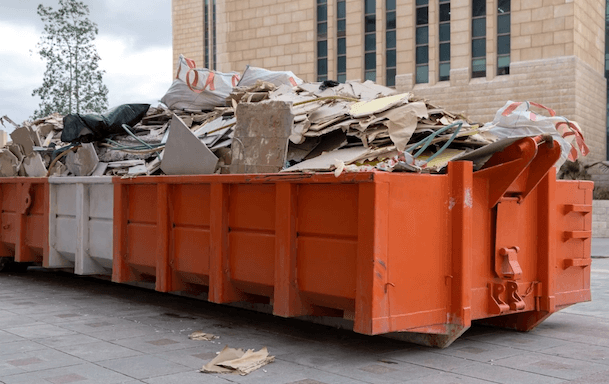
If you are asking “what materials are not allowed in my roll-off dumpster?” you are already doing the smart thing. Most issues happen when people assume all trash is treated the same. It is not.
Every area has its own waste management dumpster rules, but the categories below stay consistent across most roll-off dumpster providers and disposal sites. Use this guide to avoid delays, extra charges, or a rejected pickup.
Pricing and rules vary by city and landfill, so if you are unsure about any item, confirm with your rental company before you load it.
Quick list: what can go in a dumpster vs what cannot
Here is the fast “scan” list to cover what can go in a dumpster and what can’t you put in a dumpster.
Typically allowed in a rented roll-off dumpster
These are the most common items people ask what can you put in a rented dumpster:
- Household junk and bagged trash
- Furniture (couches, chairs, tables, dressers)
- Construction debris (drywall, wood, trim, cabinets)
- Flooring (carpet, laminate, tile in small amounts)
- Yard debris (branches, leaves) in many areas
- Scrap metal and small amounts of metal items
- Pallets and wood, depending on condition and quantity
Typically NOT allowed in a roll-off dumpster
These are common “no” items under most waste management roll off dumpster rules:
- Liquids of any kind (oil, fuel, chemicals, wet paint)
- Batteries (car batteries, lithium tool batteries)
- Propane tanks and pressurized containers
- Hazardous waste (pesticides, pool chemicals, solvents)
- Medical waste and sharps
- Asbestos-containing material (special handling only)
- Tires (often restricted and charged separately)
- Certain electronics (TVs, monitors) in many areas
- Appliances with refrigerant (fridges, freezers, AC units) unless handled correctly
If you want the safest rule: if it leaks, sparks, or explodes, keep it out.
Why these roll-off dumpster rules exist
People search for garbage dumpsters and think it is simple. In reality, the load gets hauled, compacted, and dumped at facilities with strict requirements.
A dumpster should have safe, legal contents that can be transported without leaks, fires, toxic fumes, or regulated disposal paperwork. Restricted items are blocked because they can:
- contaminate landfills
- start fires in the truck or at the dump
- injure drivers or workers
- trigger fines for the hauler
That is why waste management dumpster rules are strict even for “small” items.
The main categories of prohibited materials
1) Liquids and chemicals
You cannot put liquids in a dumpster. This includes:
- gasoline, diesel, kerosene
- motor oil and transmission fluid
- antifreeze, brake fluid
- pesticides, herbicides, insecticides
- pool chemicals and strong cleaners
- solvents and thinners
- wet paint
Even “sealed bottles” can leak under pressure. If it is liquid, treat it as not allowed.
2) Batteries and anything with lithium power
Batteries are one of the biggest fire risks.
- car batteries
- lithium tool batteries
- e-bike and scooter batteries
- loose rechargeable packs and power banks
If it can short-circuit, it does not belong in a roll-off dumpster.
3) Pressurized items
These can explode during hauling or compaction:
- propane tanks
- oxygen, helium, welding tanks
- fire extinguishers
- large amounts of aerosol cans
4) Regulated construction materials
The biggest one is asbestos. If you suspect it, do not guess.
- asbestos tile, insulation, siding, roofing, pipe wrap
- other regulated or contaminated materials that require a separate process
5) Medical waste and biohazards
Never place these into dumpsters:
- needles or sharps
- medication and pharmaceuticals
- blood-contaminated materials
6) Tires and special fee items
Tires are commonly restricted. Even when accepted, they often come with extra fees and limits.
Items that are sometimes allowed, but you must confirm first
This is where people get confused because the answer depends on local rules and how the dumpster company handles disposal.
Appliances
Some appliances are allowed, some are not, and fridges are a special case.
- washers and dryers: often allowed
- stoves and ovens: often allowed
- fridges and freezers: may require refrigerant handling
Electronics
Many places treat electronics as special waste.
- TVs and monitors are commonly restricted
- microwaves and small appliances are sometimes allowed, but confirm
Mattresses
Mattresses are often accepted but may require a handling fee.
Yard debris
Some areas allow yard waste in roll-offs, others require it separated.
Dirt, concrete, and heavy debris
Heavy material is usually about weight limits and safe hauling. You might be allowed to toss it, but only in the right container setup.
If your project includes dirt, rock, concrete, brick, or tile, tell your provider up front.
Apartment dumpster rules vs rented roll-off dumpster rules
Apartment dumpster rules are different because those garbage dumpsters are shared and serviced on a fixed schedule. Most apartments restrict:
- furniture and bulky items
- mattresses
- construction debris
- electronics
- tires
A roll-off dumpster rental is built for bulk disposal, but it still has restrictions. So if you are moving out or doing a cleanout, do not assume your apartment dumpster rules match roll-off dumpster rules.
What can you put in a rented dumpster without problems?
Here is the most practical “what can go in a dumpster” list for normal cleanouts and remodels:
- bagged trash, boxes, clothing, toys
- furniture and household junk
- wood, drywall, cabinets, trim
- flooring and carpet
- small metal pieces, shelving, bed frames
- pallets and lumber, as long as your provider accepts them
- yard waste in many areas if it is clean and not mixed with dirt
If you keep it dry, non-hazardous, and within weight limits, you are usually safe.
If you are in Arizona, talk to Dumpster Relief before you load questionable items
If you are booking a dumpster in the Phoenix metro area and you are unsure about an item, call first. It saves time and prevents pickup issues.
Common questions people ask (not as FAQ format)
Below are quick, direct answers to the most searched questions, written as normal sections so they still read clean.
Can I put a mattress in a dumpster?
Often yes, but many providers charge a handling fee and some landfills limit them. If your rental company allows mattresses, load it flat so it does not block space.
Can you put tires in a dumpster?
Usually no. Tires are commonly restricted and require separate disposal. If accepted, it is often with extra fees and limits.
Can you put paint cans in a dumpster?
Wet paint is typically not allowed. Paint products create leak and contamination risk. Ask your provider about the safest option for your area.
Can you throw paint in a dumpster?
Treat liquid paint as not allowed. Do not pour it into the dumpster and do not toss liquid containers.
Can you put dirt in a dumpster?
Sometimes, but dirt is heavy and can exceed weight limits fast. If you need to toss dirt, tell your provider so they recommend the right dumpster size and weight plan.
Can I put yard waste in a dumpster?
In many areas, yes, if it is clean yard waste like branches and leaves. Some places require yard debris to be separated from trash and construction debris.
Can you throw a TV in the dumpster?
Often restricted because it is treated as electronic waste. TVs and monitors are commonly rejected at disposal sites. Confirm before loading.
Can you throw away a microwave in a dumpster?
Microwaves are sometimes allowed, sometimes treated as e-waste. It depends on the disposal facility. Confirm if you want to avoid surprises.
Can you put pallets in a dumpster?
Many roll-off providers accept pallets and wood. Some prefer pallets to be broken down to save space and reduce pickup issues.
Can you put wood in a dumpster?
Yes, wood is commonly allowed. This includes lumber, trim, and cabinets, as long as it is not contaminated with chemicals.
Can you put appliances in a dumpster?
Some appliances are allowed, but fridges and freezers can be restricted because of refrigerant rules. Always confirm appliances before tossing them.
Can you put a fridge in a dumpster?
Fridges are a special case. Many disposal sites require refrigerant handling. Do not load a fridge unless your provider tells you it is approved.
Can you throw metal in the dumpster?
Small amounts of metal are usually allowed. Large volumes can be allowed too, but weight can add up. If you have a lot of metal, ask if recycling is cheaper.
Can you throw furniture in a dumpster?
Yes, furniture is commonly allowed in rented dumpsters. Break down large pieces to save space and prevent overfill.
Final loading rules to avoid a refused pickup
If you want a clean pickup with no drama, follow this:
- keep the load dry and non-hazardous
- do not throw liquids, batteries, or tanks
- keep debris level with the rim
- do not hide prohibited items inside bags
- if it is heavy, confirm weight rules before loading
If you want, share Dumpster Relief’s exact “allowed and not allowed” policy list you use internally. I will rewrite this post to match your real rules exactly, without copying language from anywhere, and I will also add Arizona-specific examples for cleanouts, remodels, roofing, and concrete jobs.
